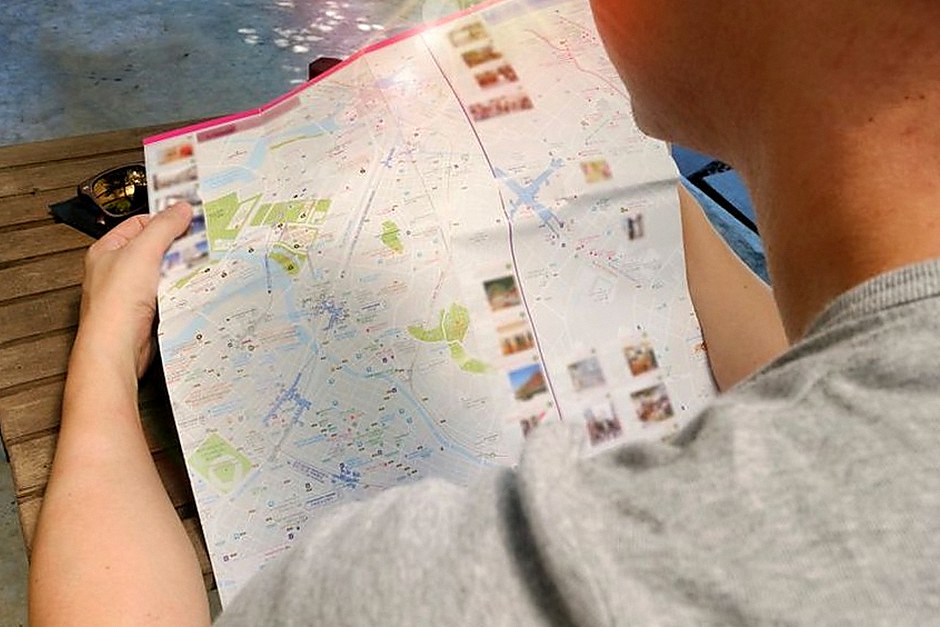
Paper maps are often most interesting when the journey is over. By then the clean folds have softened, a corner may be worn from rain or a pocket, and a few streets have acquired meaning that no printed symbol could show. A map that has traveled with you is less a navigation tool than a record of decisions: where you changed direction, where you stopped, and which route looked ordinary on paper but became the part you remember.
Mark the places that changed the day
Do not try to document everything. Add only the places that altered the rhythm of the trip: the bakery you returned to twice, the quiet square found by accident, the viewpoint reached just before the weather turned, the station where you decided to get off early.
A date and a short note in the margin is enough. “Lunch after the rain” may bring back more than a long diary entry. If you travelled with someone else, ask them to add one mark of their own. Two memories on the same map rarely choose the same place.
Draw the real route, not the planned one
Digital route histories are precise, but precision is not always the most useful kind of memory. On paper, trace the road or path approximately. Include the wrong turn, the bus ride that replaced a walk, or the street you crossed repeatedly because it became familiar.
These imperfect lines explain how the place was actually experienced. A trip rarely unfolds according to the first plan, and the visible detours are often the most personal part of the record.
Keep the evidence of use
Resist the urge to make the map neat again. A coffee ring, a taped tear, a train ticket tucked into a fold or a pencilled opening time belongs to the story. The object becomes more interesting when it shows that it was useful.
If the map is too large to store comfortably, fold it along the original creases rather than trimming it. A small paper band with the destination and year can keep it closed on a shelf without hiding the marks inside.
Bring it out before the next journey
Old maps are good planning tools precisely because they are incomplete. Spread one out before returning to the same region and look for the spaces you never reached. The blank edge of a previous route can suggest a new walk more naturally than a list of “top things to do.”
You can also compare maps from different years. New roads appear, train lines change, neighborhoods acquire new names, and places that once seemed far apart become familiar. The paper becomes a quiet record not only of the landscape, but of your own changing sense of scale.
Most travel objects are souvenirs because they were bought to remember. A used map is different. It becomes memorable because it helped you move through a place, then kept the shape of that movement after you came home.