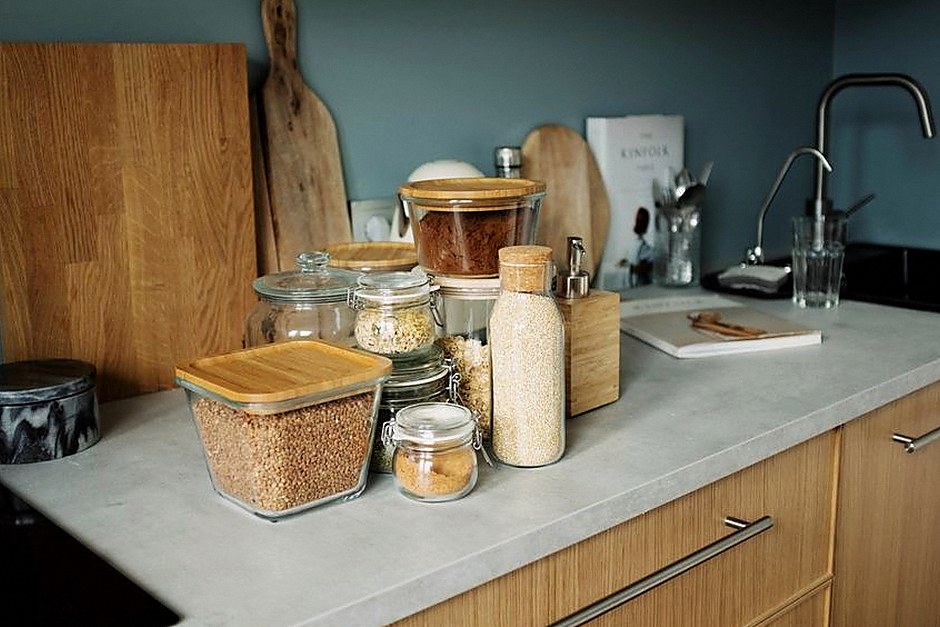
A kitchen counter is valuable because it is empty space that can become almost anything: a place to chop vegetables, knead dough, unpack groceries or set down a hot pan. The trouble begins when every useful object earns a permanent place there. Soon the counter is technically organized but practically unavailable.
The answer is not to clear everything away. A working kitchen needs a few objects within reach. The better question is whether an item helps the next cooking task often enough to justify the space it occupies all day.
A clear counter is not an empty counter
Start with the tools you use most mornings and most evenings. A kettle used several times a day belongs in a different category from a mixer used twice a month. The same goes for a cutting board that is genuinely in daily rotation, a jar of wooden spoons beside the stove, or a small tray holding oil and salt.
Permanent counter space is usually earned by frequency, not by how attractive an object looks. If something is decorative and useful, that is a bonus. If it is decorative but constantly moved out of the way, it is probably asking too much of a small room.
Give each work zone one anchor
Instead of treating the entire counter as one surface, divide it mentally into small zones. Near the stove, the anchor might be cooking oil and a utensil pot. Near the kettle, it might be a tray with tea, coffee and two everyday cups. Beside the sink, perhaps only the soap and brush need to stay out.
- Keep together what is used together. A small tray makes several loose objects behave like one.
- Protect one uninterrupted work area. Even 60 to 80 centimeters of clear counter can change how easy dinner feels.
- Store duplicates first. The second pepper mill and the fourth chopping board rarely need to live in the busiest part of the room.
Create a landing place for temporary things
Most counter clutter is not permanent equipment at all. It is mail, a shopping bag, a parcel, fruit waiting to be put away, or a mug that has not made it to the dishwasher. These objects need a short-term destination.
A bowl for keys, a hook for a reusable bag, or one small basket for items that belong elsewhere can keep the cooking surface from becoming the default landing zone. The important part is that the temporary container stays small. Once it is full, it must be dealt with rather than expanded.
Reset the surface at the end of one task
Do not wait for the kitchen to feel messy enough to deserve a full clean. After breakfast, return the counter to its starting condition. After dinner, put away the ingredients before sitting down. These two-minute resets prevent small leftovers from one task becoming obstacles for the next.
A useful counter should make the room feel ready, not staged. Leave out what shortens the path to cooking, store what you use occasionally, and protect enough open space that tomorrow’s meal has somewhere to begin.